
Beethoven the Master | November 2025

Saturday, 15 Novemer 2025 - 7:30pm

The Great Hall . . .

Cornerstone Building

Liverpool Hope University

Creative Campus

17 Shaw Street

Liverpool

L6 1HP
Beethoven – The Master 15th November

Concert Revue

Dr. Ruth Wills

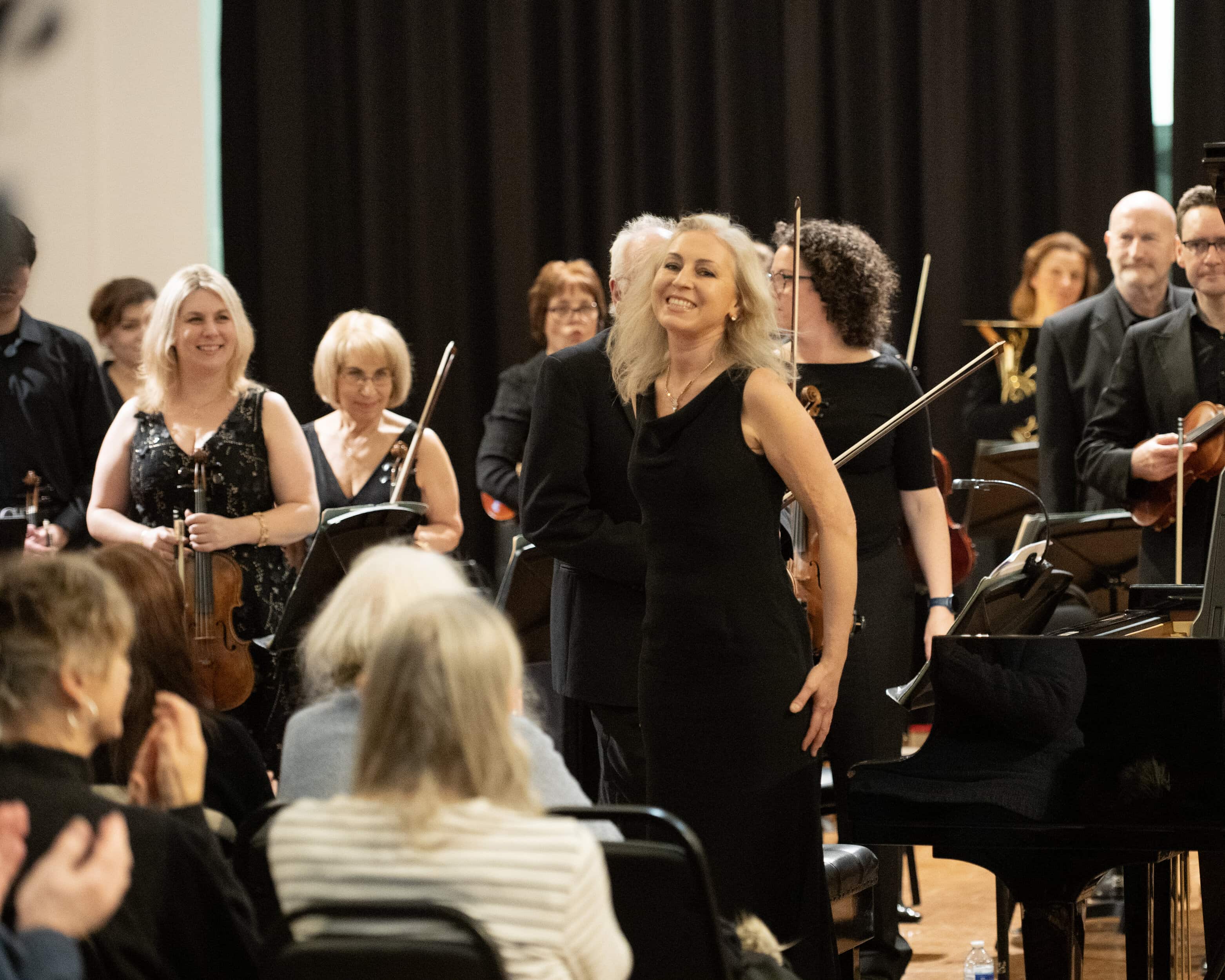
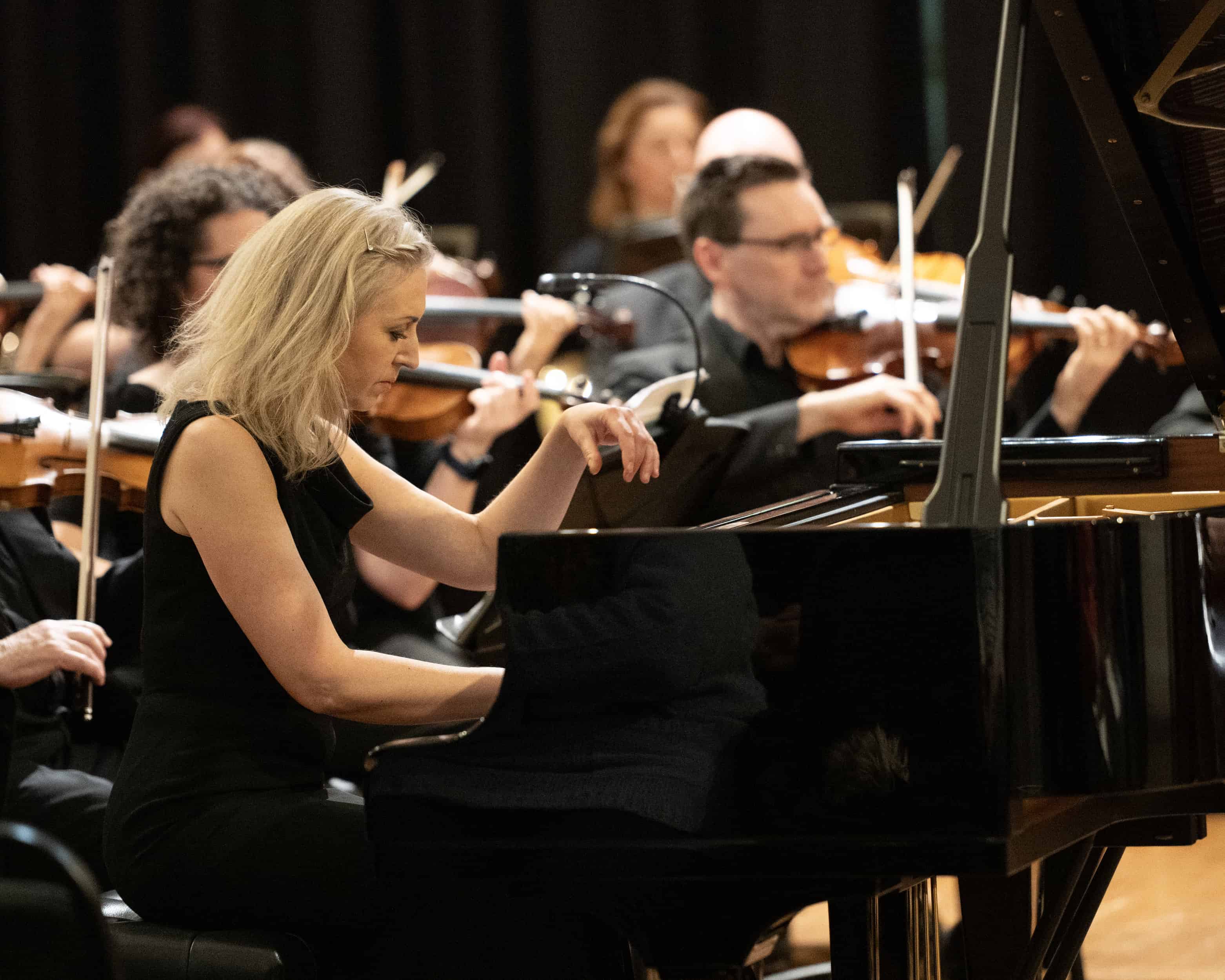
Last evening the Hope Metropolitan Orchestra tackled two very challenging pieces by Beethoven and pulled them off superbly. The contribution by the soloist Lauryna Sablevciciute in the ‘Emperor’ concerto was glittering. She embodied the music and brought a quite personal touch to an outstanding performance of a familiar piece. There was, however, a very good balance with the orchestra, neither out shining the other - credit to the conductor, Stephen Pratt.

Beethoven's 7th Symphony is quite a lengthy piece but the performance had the audience engaged and it seemed to fly by. I loved the introduction of the contra-bassoon (using a reconstructed part by Stephen Pratt), and again familiar passages were performed with sensitivity. 

The venue was fitting for the repertoire with the high ceiling and acoustics in the Grand Hall of the Cornerstone building adding something to the performance. Congratulations to all involved.

Dr. Ruth Wills - November 2025

Images: Alan Smith 2025

Hope Metropolitan Orchestra, conducted by Stephen Pratt

Beethoven – The Master 15th November

Stephen Pratt offers a few thoughts about technology and tonight’s music:

The role of musical instrument technology in the development of the various ‘periods’ of musical style is often overlooked but does plays a significant part, especially if we include the broader science of tuning. Take, for example, the various approaches to tuning which emerged between the C17th and C18th to enable keyboard instruments to play more effectively in a wider collection of keys. Bach’s two sets of keyboard preludes and fugues known as the Well-Tempered Clavier sees all 12 key areas explored in both major and minor settings and is a major (forgive the pun) C18th landmark. Prior to developments such as this, moving (say) from the key of C to A flat could prove somewhat hazardous, with the latter sounding considerably ‘out of tune’. Eventually the system of equal temperament tuning was adopted, and that is what our ears are used to today – not without some controversy, it has to be said.

Then, there’s the actual making of the instruments. The industrial revolution which transformed so much during the first part of the C19th also had an impact upon musical instrument technology. Metal frames (originally iron) were not used in piano construction until around 1825, and this enabled greater load bearing for the strings and greater stability of tuning. As an inevitable consequence, the range of the piano was gradually extended through the C19th to the 88-note standard which is in place today. In Beethoven’s lifetime, the range went from five octaves (60 notes) to six and a half (c.78 notes). So developments in technology enabled him to write music which could explore these extensions as they became available. As such, the ‘Emperor’ concerto is an important stage in that journey, exploring extremes of the keyboard that were relatively new. That said, the pianos of Beethoven’s time made a much lighter sound – the resonant bass of the lower octaves of our Steinway B (now with a bespoke steel frame made at Steinway’s own foundry!) simply were not available.

Going beyond the piano, nearly every instrument in tonight’s orchestra would have been different in Beethoven’s time. All the string instruments would have used gut strings, much softer in tone than the steel used today; the key mechanisms on the wind instruments were much fewer and somewhat primitive in construction and the brass instruments did not have valves. The horns in particular could only play all the notes of a scale by subtle manipulation of the lip position and altering the position of the hand inside the bell of the instrument. The sounds that came out were consequently uneven in tone and volume, but there must have been some skilled practitioners around, as we hear in the second horn parts in both of tonight’s pieces and the fourth horn parts in Beethoven’s Ninth Symphony. Life must have changed immeasurably for horn players when valves gradually came into use through the 1820s!

All of the above had an impact upon intonation, volume levels and tone quality – in short, the sound of tonight’s pieces at their first performances (Concerto in Leipzig 1811, Symphony in Vienna, December 1813) would have been noticeably different.

And so to the music

As the writer and pianist Charles Rosen once observed, Beethoven sits Janus-faced in the first quarter of the C19th. Like the mythical Roman God, he looks both backwards and forwards, and our two pieces tonight exemplify this.

From the last quarter of the C18th, Beethoven inherited the movement patterns of both the three-movement concerto and the four-movement symphony – The ‘Emperor’ with Allegro outer movements and an Adagio middle movement, and the symphony with a four movement pattern that (for example) Haydn and Mozart frequently used. However, within these external shapes the other, forward-looking face is evident; the quick, playful Scherzo third movement in the symphony (a form that we can attribute to Beethoven) in place of the traditional and more stately Minuet is the most obvious in this respect. The Concerto begins with three big flourishes for the piano, exploring the wider range (see above!) – and it was rare for the solo instrument in a concerto to be heard before the orchestra had properly opened proceedings. On a more subtle level, the interplay between the soloist and the orchestra, especially in the first movement was quite new, as was the joining of the end of the Adagio movement to the start of the Finale. However, the real revolution was going on inside the music itself. The musical language of the C18th was dominated by the continuing development and establishment of the tonal system, a system of hierarchies. In any one major key, the most prominent harmony would be that of the tonic chord- so in a piece in C major, that harmony would be the chord of C (a three note comprising C,E and G). The next most important chord was that of the dominant (G,B and D). This hierarchy and surrounding relatives (especially the subdominant, F) sat at the heart of musical form in the C18th. Indeed, the most important musical form of the C20th, the twelve-bar blues uses those same three chords (eg C, F and G).

What we hear in both of tonight’s works is Beethoven taking part in a journey that was beginning to undermine these relationships and explore the ‘new’ effects that were emerging. So, the first movements of both works do not routinely trot off to the dominant after establishing the tonic, but instead take a journey via chords that are often three steps away from home instead of five. Perhaps the most striking example of this new thinking comes with the Adagio movement of the concerto. The extraordinary ‘otherworldly’ effect of a movement in B major in a piece that is otherwise well-grounded in Eb is astonishing. How fitting that in wanting to portray Tony and Maria’s desire to find ‘another place’, Leonard Bernstein lifted a phrase from the opening bars of this movement for the ‘Somewhere’.

Such explorations of ‘remote’ keys had been made possible by the tuning developments outlined above. As in so many areas of artistic innovation, developments science and technology often provide the opportunity.

Stephen Pratt - November 2025

Pianist: Lauryna Sableviciute

More than any other musician, Beethoven (1770 - 1827) changed the course of music. After his death, nothing was the same again. He inhibited later composers who felt that they couldn’t compete with his intellectual rigour and outstanding imagination. Unlike previous composers, none of his works sounds like another. Even his first three sonatas, published when he was thirteen, are noticeably individual.

Just as he was consolidating his reputation, the signs of deafness began to plague him: the most cruel fate for a musician. By the time he wrote the Emperor Concerto and his seventh symphony he was unable to hear with any clarity. Although the greatest pianist of his time, he did not play this last of his concertos because he could not hear the orchestra or keep in time with them. Yet his spirit remained undaunted and he went on to write what many consider to be the finest of all symphonies, sonatas and string quartets.

Piano Concerto no. 5 in Eb, opus 73.

Is this the greatest concerto of them all? Quite possibly. Certainly it's written on a very grand scale from the majestic opening to the piano's final flourish. Between the two comes a slow movement of exquisite lyricism which leads, without a break - and this was an innovation - into the lively finale. The nickname Emperor was not given by the composer but does suit the piece, written at the height of his powers, in 1809.

Symphony no. 7 in A, opus 92.

This occupied Beethoven during 1811-12 and has been called, by some authorities, his Dance Symphony. Each listener can decide for themselves as the four movements progress, but it particularly applies to the toe-tapping last movement. As always, with this composer, each of his pieces is unique. He set himself a different challenge in each one. Although the concerto and symphony were written within a four year period they sound quite different from each other while still having all the musical fingerprints of the composer.

Born in 1770, he died in 1827 which means his bi-centenary arrives in in two years' time. Look out for our series of concerts celebrating this important event.

Ticket Prices*

General Admission: £13.20


Liverpool Hope University current staff and students: Free


Family (2 adults plus children): £26.40


School or college students: £3.30


*Includes booking fee